AER
One exhalation controls a wooden voice and its electronic reflection.
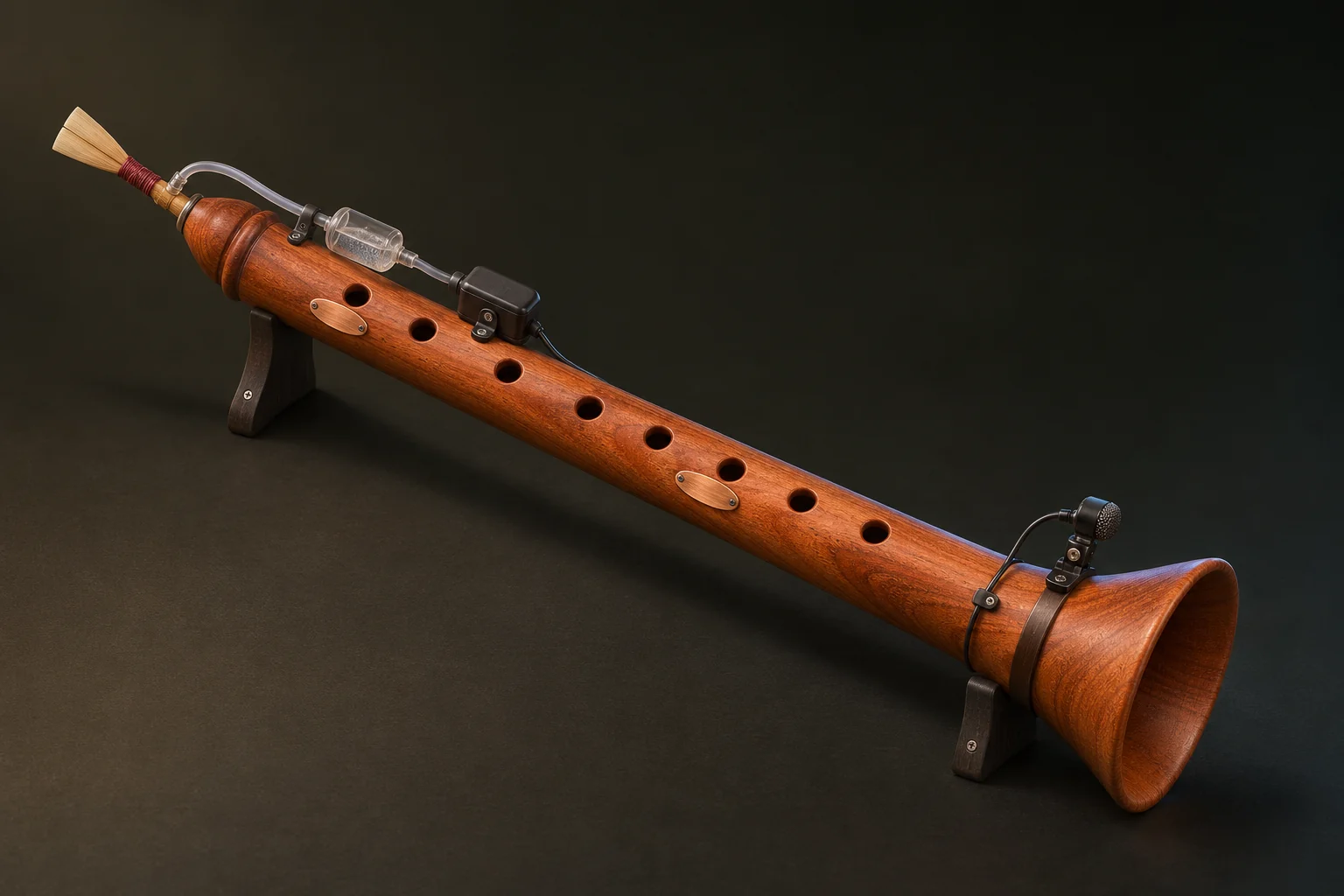
Studio visualization. Not to scale.
Where the sound begins.
A wooden tube with a double reed and open finger holes. A removable, thin pressure-sampling tube is attached beside the reed: its tip sits near the player’s mouth, with a sealed sensor behind a moisture trap. It transmits pressure through a nearly stationary column of air, without continuously diverting airflow from the instrument.
A new degree of freedom.
A differential sensor compares pressure at the mouth with atmospheric pressure. After filtering, this signal controls the synthesizer’s brightness. A miniature microphone records the acoustic voice, while two removable capacitive pads on the body provide hold and layer-switching gestures. They are not used to identify every note of the fingering.
How to play it.
Your breath controls the brightness of the electronic layer; one sensor pad holds the selected voice, and the other switches layers. The player still selects acoustic notes with the finger holes.
- Sonic character
- A breath-infused tone with an electronic trail that slowly drifts away.
- Materials
- Apricot wood · reed · food-grade silicone
Practical considerations.
Pressure is not the same as airflow and does not reveal a note’s pitch on its own. Disconnect the sensor channel before cleaning and dry it afterward; check the zero level and airtightness. In the basic mode, the electronic voice takes notes from a preselected scale, rather than automatically recognizing the performance.
Working prototype.
A performance instrument with a separate sensor module. The next revision focuses on air-channel maintenance and attachment mounting.
Contact the studio for the current configuration, instrument availability, and assembly schedule.
The story behind one design decision.
How can breath shape a second voice without making the musician operate another instrument?
AER connects two voices through one breath. Reed and airflow shape the acoustic phrase, while the smoothed pressure signal changes the electronic layer’s brightness. One pad holds the electronic note; the other switches between preset layers. Each layer’s note and timbre are set before performance.
What changed in the design
We replaced the initial universal pressure mapping with individual calibration for the reed and the player’s habits. One person’s gentle breath need not produce the same sensor value as another’s. The attachment is removable, so the acoustic voice can be recorded and compared on its own.
First study.
Three actions to hear the design at work and feel its limits.
Play one long note without the electronic layer.
Add an electronic note and gradually change its brightness with your breath.
Hold the background with a touch, end the exhalation, and check that the two voices end independently.
Care and recalibration
Service the moisture trap and replaceable mouthpiece parts separately from the electronics. Set the pressure zero with no breath applied; check the software threshold for returning to silence before the session.
What the instrument record contains ↗